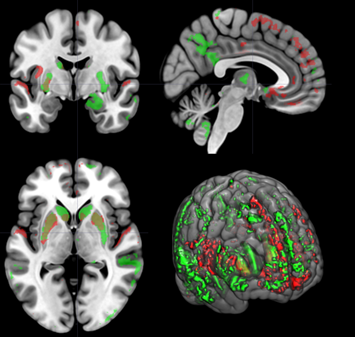
Nowadays, functional imaging technologies are providing information of great interest in the neuroscience of psychiatric disorders, where statistical learning-based approaches are qualified to provide new insights into these disorders, such as the Autism Spectrum Condition (ASC). Beyond classical data mining based systems, and given the great computational power available, we are in the position to overcome the standard psychiatric paradigms of the last fifty years, proposing new variables of importance and deep learning based architectures to reveal hidden features in various neurological disorders. The main results are detailed as follows
1. Various classification methods based on hybrid architectures in CAD systems (see the article at https://www.ncbi.nlm.nih.gov/pmc/articles/PMC4047979/ ), which employ feature selection/extraction approaches and statistical classification methods that, when applied to brain regions, provide new maps of relevance in the characterisation of the Autism Spectrum Disorder (ASD). The MRI image patterns obtained are used for both binary and multiclass classification to demonstrate the existence of an endophenotype in the Autistic condition.
2. Development of a technique called Significance Weighted Principal Component Analysis (SWPCA) to reduce undesirable variance in intensity due to acquisition site. (see the article at https://www.ncbi.nlm.nih.gov/pubmed/27774713 ), and thus increase the statistical power in detecting group differences [2] under classical statistical validation schemes which, in this context, characterise with difficulty, by means of neuroimaging, this heterogeneous condition.
3. Proposed simpler estimators and their upper bounds (see the article at https://www.worldscientific.com/doi/10.1142/S0129065718500582 ), such as those based on the estimation of the resubstitution error, to provide relevant information about the condition. In this sense, a quaternary classification problem (sex and condition) has been specified, with restrictions in terms of classifier complexity and feature space dimension, revealing how sex modulates Autism using a low-dimensional feature space extracted by voxel-based morphometry (VBM). Moreover, an analysis of spatial overlap in reference maps partially corroborates the predictions of the “extreme male brain” theory in Autism in regions of sexual dimorphism.
Finally, all these machine learning-based techniques have the potential to provide in-vivo assessment of functional/structural brain parameters in numerous neurological disorders. Relevant links to the highlighted results can be found at: https: //github.com/SiPBA/swpca
Period
May 2007 – current
Researchers
Juan Manuel Górriz Sáez, Javier Ramírez Pérez de Inestrosa, Fermín Segovia Román, Francisco J. Martínez Murcia.
Colaboradores: Prof. John Suckling, University of Cambridge, UK, Prof. Simon Baron Cohen, University of Cambridge, UK, Prof. Michael Lombardo, University of Cyprus, CY., Prof. Meng-Chuan Lai, University of Toronto, CAN.