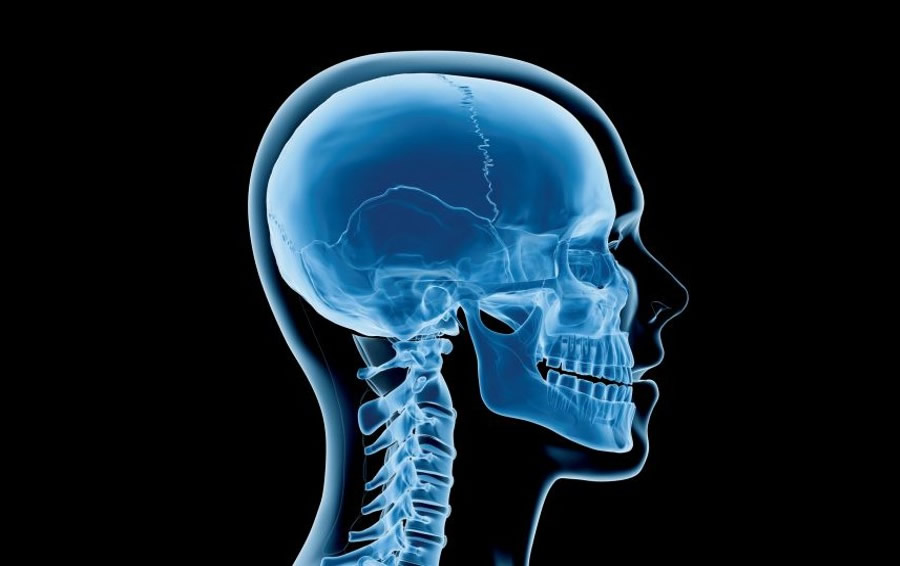
Within Forensic Identification (FI), we focus on Forensic Anthropology (FA). FA deals with the evaluation of human skeletal remains to determine the identity of the deceased person, as well as the cause and manner of death. It represents the first step in any identification process and the last chance for identification when DNA or fingerprints cannot be applied. It includes methods such as biological profiling involving skeletal-based age estimation (SBE), craniofacial superimposition (CFS) and comparative radiographic (CR). CFS is vital for the prior description and analysis of skeletal remains by anthropologists. CFS is an IF technique aimed at determining whether a skull found corresponds to a known individual (the presumed deceased) by superimposing the former (an X-ray, photograph or 3D model) on one or more photographs of the latter and subsequent morphological analysis of their correspondence. In the process of personal identification, CR involves the direct visual comparison of ante mortem (AM) and post mortem (PM) X-rays of the candidate person and the comparison of specific visual findings or characteristics. Most practitioners still apply a manual, visual comparison of AM and PM data using old subjective methods. Therefore, automatic methods and human-centred models are a real need in PA.
There is a huge and growing number of unidentified bodies due to natural disasters, major accidents, terrorism, crime or war. Forensic methods based on the study of the skeleton play an important role in the IF process. We are a pioneering research group in the application of Soft Computing and computer vision techniques to IF. We started our collaboration with the Physical Anthropology Laboratory of the University of Granada led by the prestigious anthropologists Dr. Botella and Dr. Alemán in 2005.
Our main joint contribution to the field concerns the automation of the CFS technique. A hybridisation of computer vision and SOCO resulted in the most advanced computer system to help the forensic anthropologist identify a missing person by CFS.
Transferimos esta tecnología al software Face2Skull, tras la obtención de la patente internacional correspondiente. Ya ha sido comercializado en México (por Aspelab). Face2Skull también ha sido utilizado por diferentes Dpts. de Justicia en Europa y África, para fines de FI.
Info and contact: {ocordon,sdamas} at ugr.es
Periodo
Jan 2005 –
Investigadores
Oscar Cordón, Sergio Damas, Oscar Ibáñez, Pablo Mesejo, Andrea Valsecchi, Enrique Bermejo (Instituto Interuniversitario Andaluz de Investigación en Data Science and Computational Intelligence),
Colaboradores: Inmaculada Aleman (Laboratorio de Antropología Física – Universidad de Granada, España), Caroline Wilkinson (Directora de la “Liverpool School of Art & Design” y Directora de FaceLab, UK), Tzipi Kahana (Hebrew University of Jerusalem, Israel).
Premios
Este trabajo fue reconocido con dos premios internacionales en 2011:
- International Fuzzy Systems Association Award for Outstanding Applications of Fuzzy Technology
- European Society for Fuzzy Logic and Technologies Best Ph.D. Thesis Award to Dr. Ibáñez’s PhD dissertation (supervised by Drs. Cordón and Damas).