Ciclo de conferencias

Ada Lovelace Talks

The first computer programmer

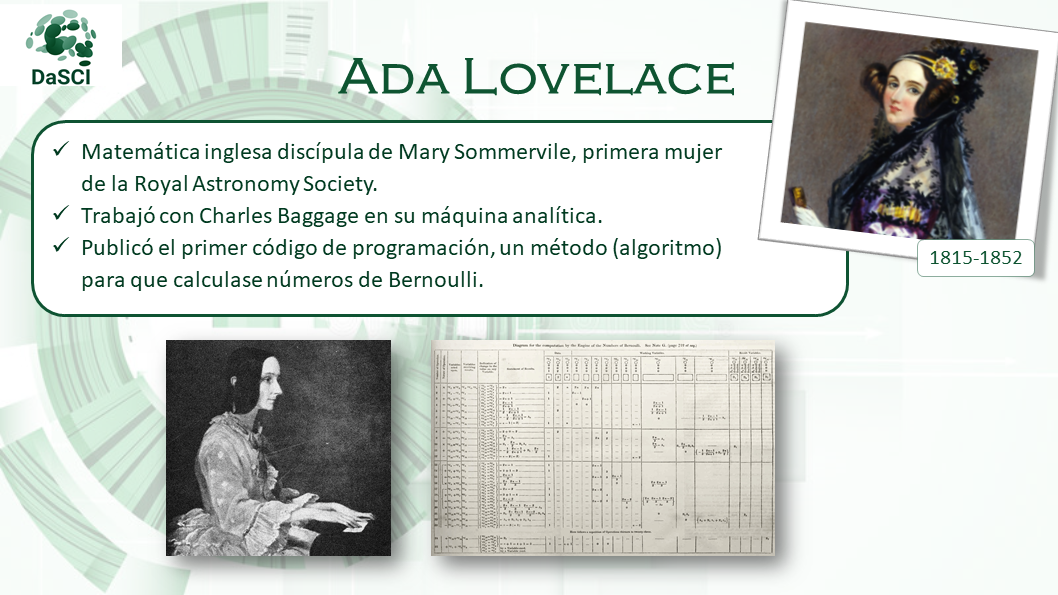
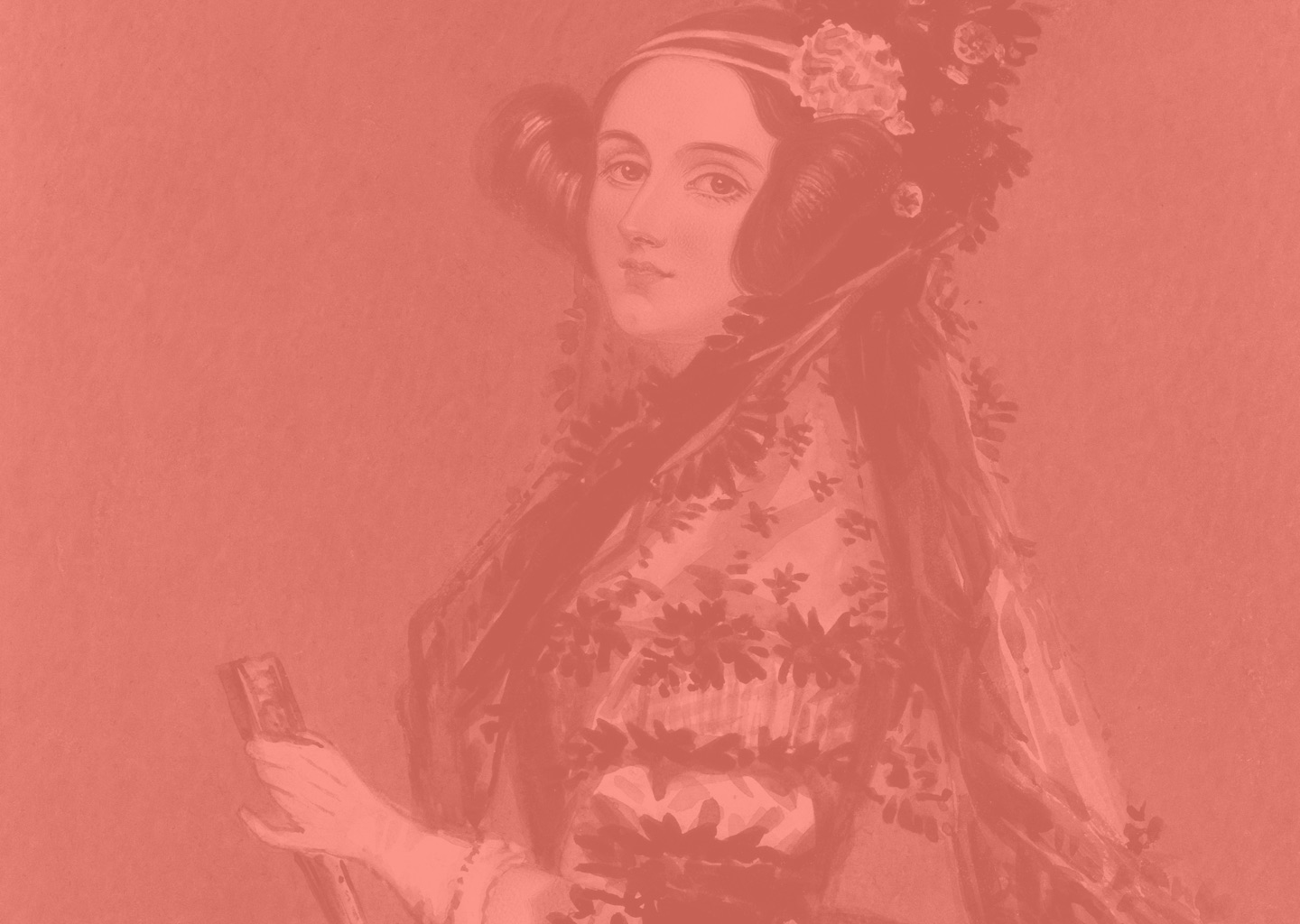
She is considered the first woman programmer in history, and for DaSCI her assertion that machines were capable of more than simple calculations conveys a lot of courage in the face of adversity. When we do research, the calculations are certainly not simple, things never work out right the first time and there is a constant effort to get better results. 

Now our effort, and Lady Lovelace is our reference, is to make Artificial Intelligence reach all audiences, both specialized and non-specialized, free of prejudices and with knowledge as a reference. That is why in this year 2021 the first edition of the Ada Lovelace Talks on Artificial Intelligence has a spectacular line-up of speakers.

In addition, the second Tuesday of October is International Ada Lovelace Day, a date to commemorate the achievements of women in fields such as technology, science, engineering and mathematics.
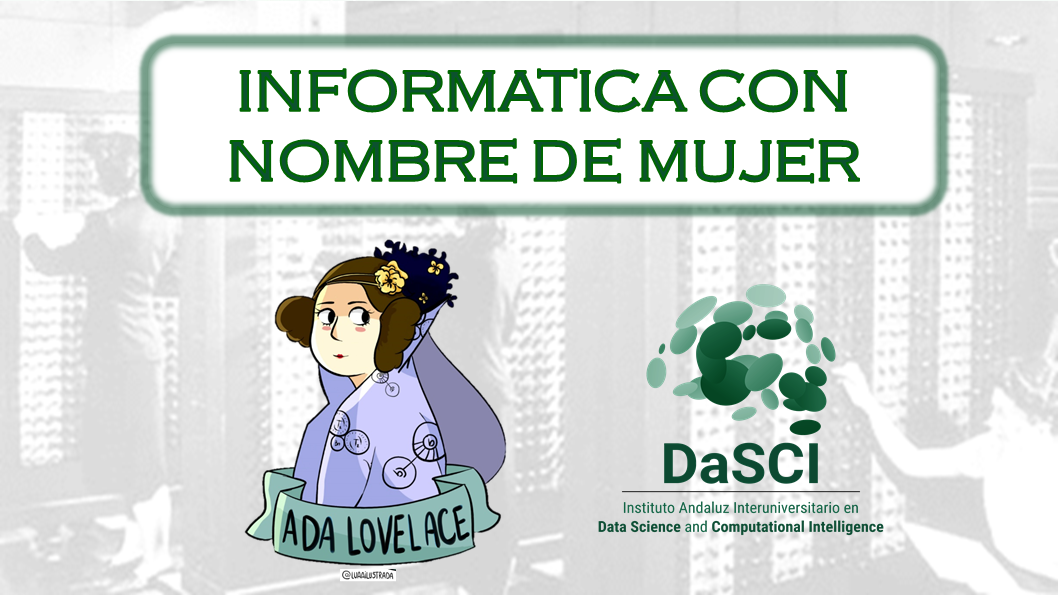
Ada Augusta Byron, also called Lady Lovelace, was one of the most interesting characters in the history of computing. She was born in London on December 10, 1815. She was the daughter of the famous romantic poet Lord Byron and the mathematician Annabella Milbanke.

As a child and as a consequence of a severe measles, the young girl spent a lot of time in bed dedicated to reading and studying music, French or mathematics. It is very important to know that her parents wanted the best scientific training for Ada, which was provided by the prestigious Scottish mathematician and astronomer Mary Somerville. When she grew up, and thanks to her high social status, Ada was related to many other figures of the time, for example, with prestigious scientists such as David Brewster, Andrew Crosse or Michael Faraday, and with the novelist Charles Dickens.

For Ada, Charles Babbage’s design of a calculator capable of performing numerical operations (although Babbage never built it) was a source of inspiration. So were the visits she made at a very young age with her mother to the most industrialized regions of England, where she could admire the most innovative machines that existed in 1830 as the “Jacquard loom”, a mechanical loom invented by Joseph Marie Jacquard and that already at that time used punched cards to operate.

Conferencias

No se han encontrado resultados