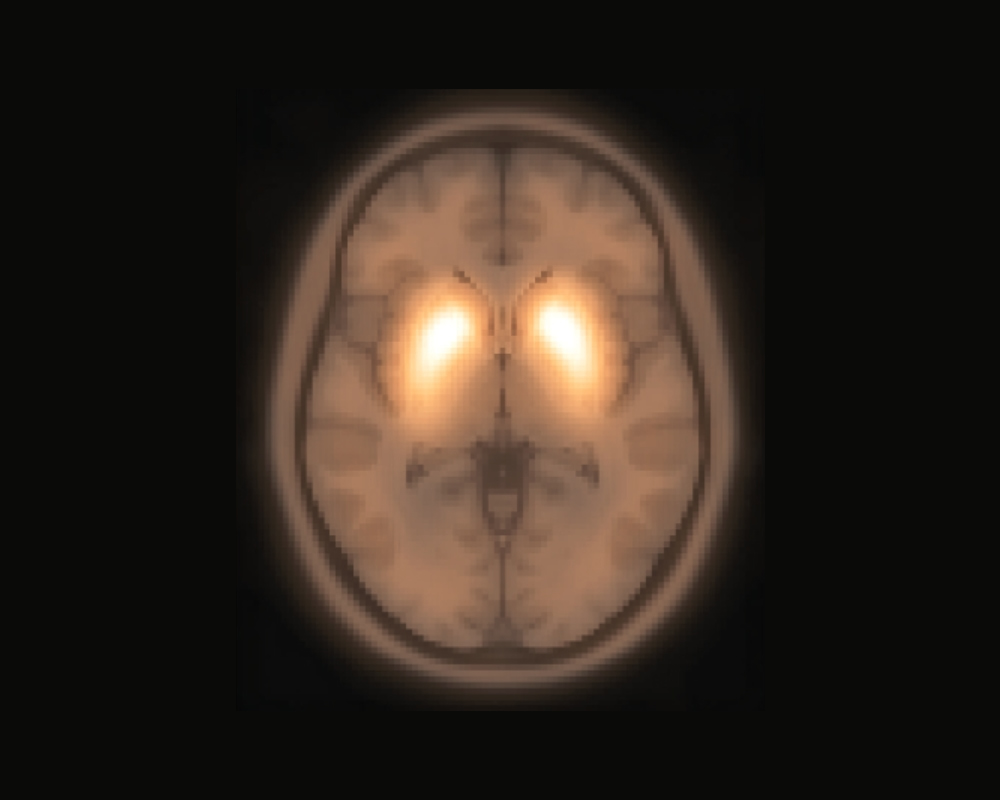
The predictive ability of neuroimaging with respect to neurodegenerative diseases such as Parkinsonian syndromes has been supported by a large number of studies. The diagnosis of PD is usually established in the clinic using the UK PD society’s brain bank criteria, which includes positive response to dopamine-based medication as a fundamental criterion. However, given that PD shares several important features with other disorders, and even PD itself can be considered as a set of distinct clinicopathological entities, there is strong evidence that these clinically established diagnoses can be erroneous at both early and late stages of the disease. In this sense, when the diagnosis is unclear, neuroimaging modalities such as PET or SPECT provide highly relevant information to clarify the patient’s condition. In particular, from the perspective of data analysis, the outstanding results have been:
1. Classification methods (see article at https://www.worldscientific.com/doi/abs/10.1142/S0129065718500351 ) in various modalities, such as FDG PET, DaTSCAN, DMFP-PET etc. and based on deep learning architectures in Autoencorders configuration. For example, four different CNN models based on well-established architectures, using or not using spatial and intensity preprocessing methods. The results show that sufficiently complex models such as the three-dimensional version of ALEXNET can process spatial differences, achieving high accuracy.
2. Systems for functional image pre-processing based on affine transformations of post-processed images of functional images such as FP-CIT SPECT (see article at https://link.springer.com/article/10.1007%2Fs12021-015-9262-9 ) or other standards based on reference regions and staged uptake ratios (SUVr) (see article at https://www.frontiersin.org/articles/10.3389/fninf.2017.00023/full) with novel imaging radiopharmaceuticals such as DMFP-based radio ligand, which allow the generation of templates that are the definition of a result of relevance to the scientific and medical community.
Finally, all these techniques based on machine learning and signal processing have the potential to provide in-vivo assessment of functional/structural brain parameters in neurodegenerative diseases such as Parkinsonian syndromes. Relevant links to these results can be found as software tools in:
https://sipba.ugr.es/research/petra/https://github.com/SiPBA/brainSimulator
Period
May 2007 – current
Researchers
Juan Manuel Górriz Sáez, Javier Ramírez Pérez de Inestrosa, Fermín Segovia Román, Francisco J. Martínez Murcia, D. Salas González
Partners: Dr. Johannes Levin, LMU Munich (GER), The Parkinson Disease Markers Initiative (PPMI)
Area / Line
Applied Technologies