- An international team of scientists, including researchers from the DaSCI Institute and the Biosanitary Research Institute of the University of Granada, has identified genetic variants that may alter the function of a key neuronal channel involved in diseases such as schizophrenia and Parkinson’s.
- The SK3 channel, essential for the regulation of dopaminergic neurons, could be the missing piece in understanding certain neuropsychiatric disorders, according to a study published in Frontiers in Neuroscience.
Granada, October 20, 2025 — Researchers Coral del Val, Igor Zwir, and Juan Emilio Martínez from the DaSCI Institute and the Biosanitary Research Institute of the University of Granada, in collaboration with the University of Texas Health Science Center at San Antonio, have published a pioneering study analyzing how genetic variations affect the structure and function of the SK3 channel—an essential protein for dopaminergic neuron activity. The work appears in Frontiers in Neuroscience.
The SK3 channel, encoded by the KCNN3 gene, regulates neuronal excitability through calcium-activated potassium currents. Its malfunction has been linked to disorders such as schizophrenia, bipolar disorder, anorexia nervosa, and Parkinson’s disease. The study used artificial intelligence tools such as AlphaFold2 to model the protein structures of different gene variants, revealing that some of them lack essential domains required for proper channel function.
“This work allows us to better understand how certain mutations can alter neuronal signaling and contribute to the development of complex diseases,” explains Dr. Coral del Val, co-author of the study. “Moreover, it opens new avenues for the design of drugs that modulate SK3 channel activity,” adds Dr. Zwir.
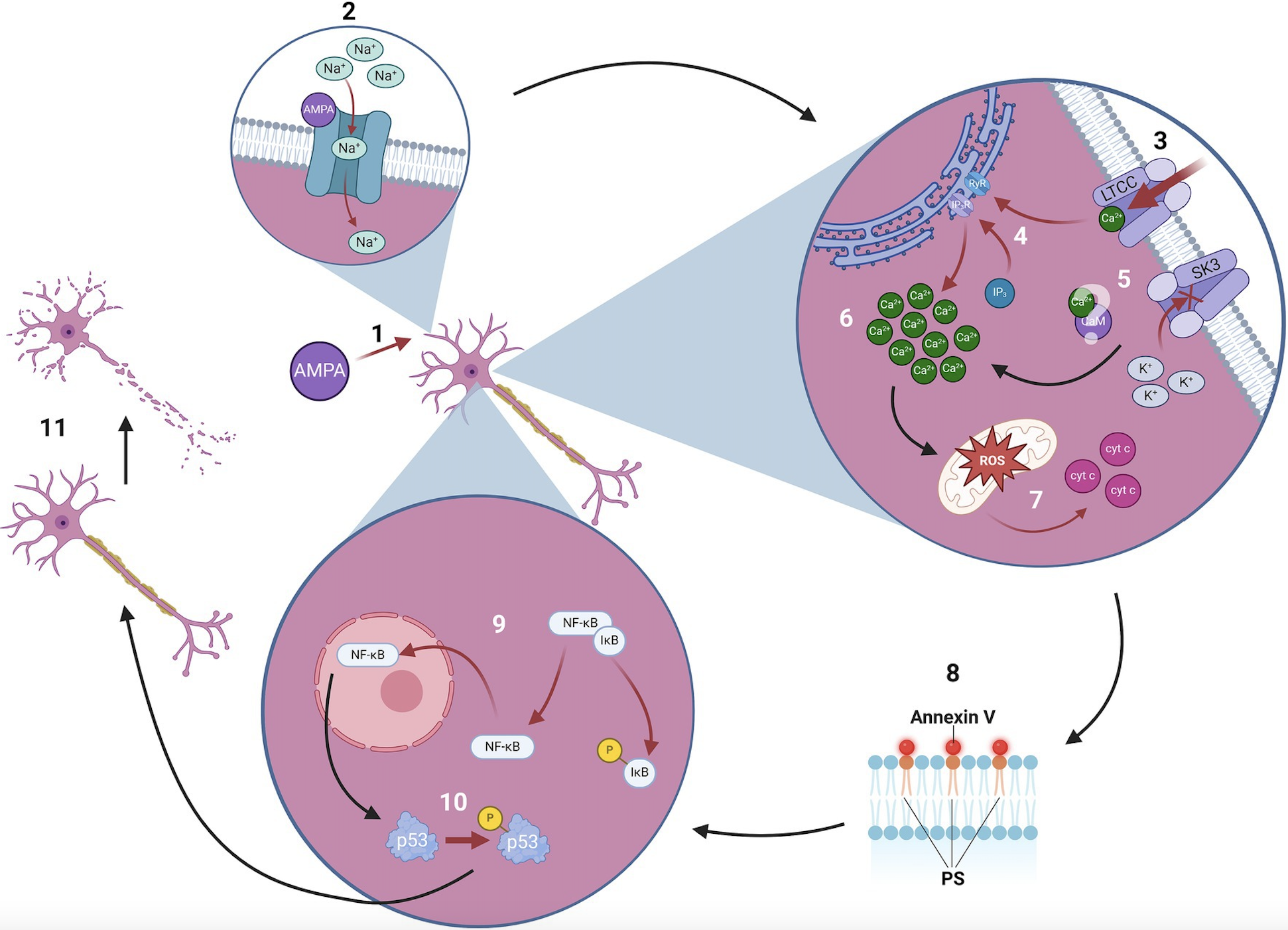
The researchers also propose a model showing how the loss of SK3 channel function may promote neuronal death through excitotoxicity, a process involved in neurodegeneration. The study highlights the need for functional assays to validate these findings and explore their therapeutic potential.
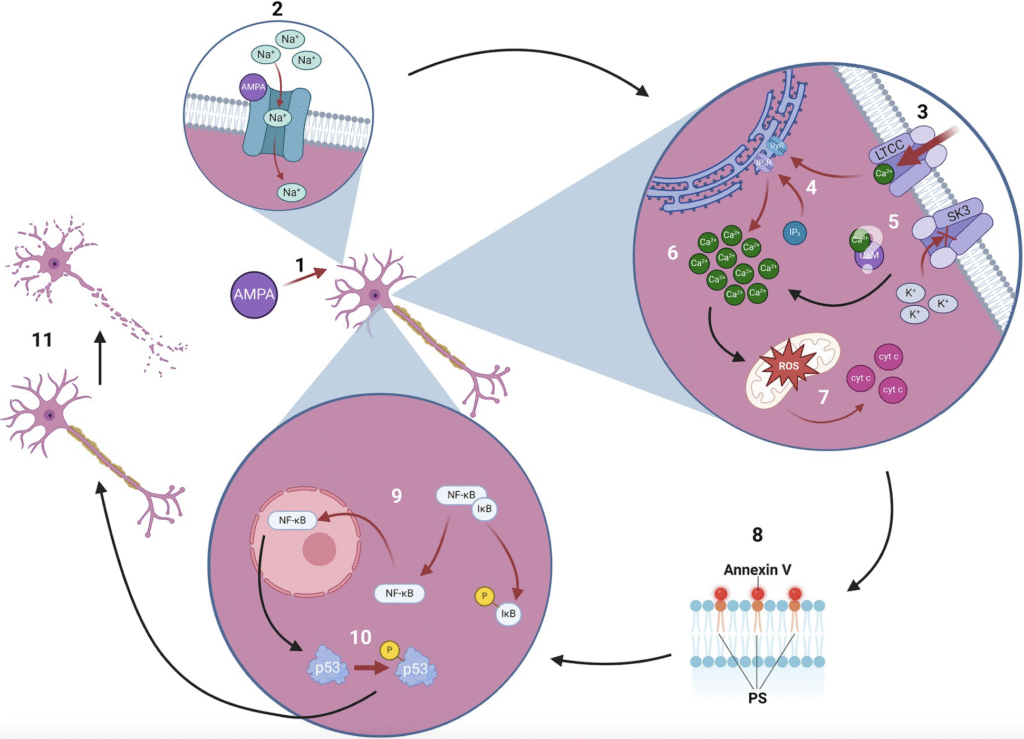
Simplified explanation of the SK3 channel’s role in neuronal death
The study suggests that SK3 channels play a key role in the death of dopaminergic neurons caused by excitotoxicity. When an excessive amount of the AMPA molecule binds to specific receptors in these neurons, a cascade of events is triggered: sodium enters the cell, the membrane becomes depolarized, and calcium channels are activated, leading to calcium accumulation inside the neuron.
Under normal conditions, SK3 channels help regulate this activity by expelling potassium, which stabilizes the neuron. But in toxic conditions, this mechanism is blocked, preventing the cell from recovering. As a result, oxidative stress and mitochondrial damage occur, triggering a series of signals that culminate in programmed cell death.

Photo: Research team led by Professors Coral del Val and Igor Zwir
Contact:
- Coral del Val – C.DelVal@decsai.ugr.es
Resources: