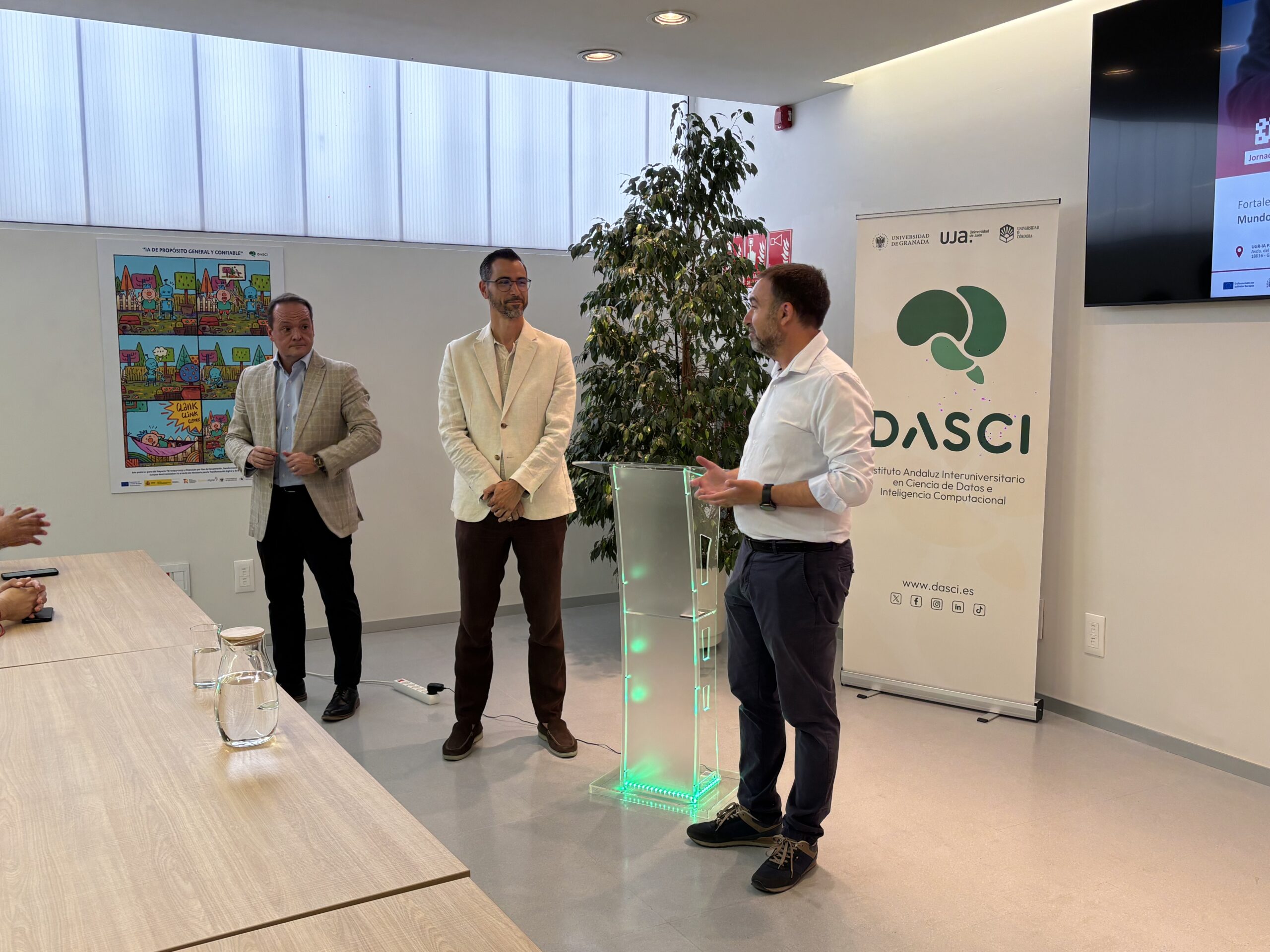
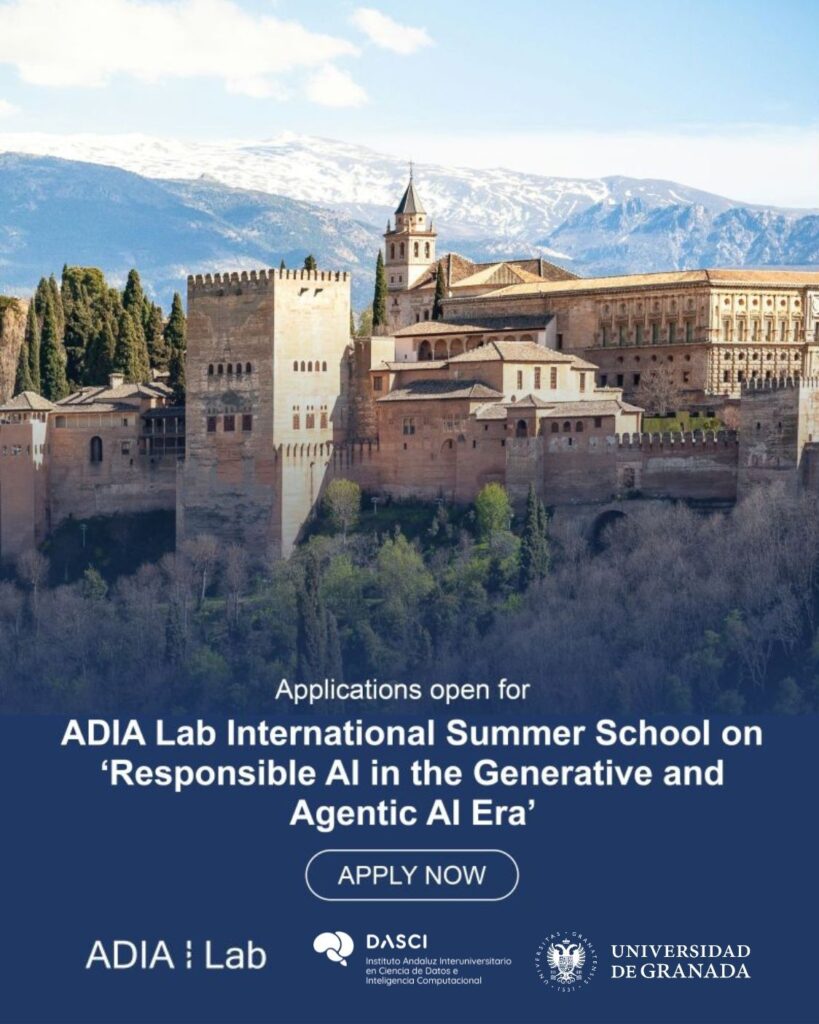
- The DaSCI Institute at the University of Granada, funded by the National Cybersecurity Institute (INCIBE) and in collaboration with the Granada Chamber of Commerce, is launching an ambitious seminar to train professionals in the ethical, technical and legal challenges of AI.
- Four specialised modules will cover topics ranging from AI governance to its application in detecting cyber threats, with a practical and multidisciplinary approach.
- Professionals in the field of technology will be able to update their skills in reliable, generative AI, data privacy and cybersecurity thanks to this pioneering initiative.
From 8 July to 28 November 2025, the Andalusian Interuniversity Institute for Data Science and Computational Intelligence (DaSCI-UGR), in collaboration with the Granada Chamber of Commerce and funded by the National Cybersecurity Institute (INCIBE), is organising an ambitious training programme focused on Artificial Intelligence (AI) and Cybersecurity. This seminar is part of the Strategic Project ‘Ethical, Responsible and General-Purpose Artificial Intelligence for Cybersecurity’ IAFER-Cib (C074/23) funded by the National Cybersecurity Institute (INCIBE), an entity dependent on the Ministry for Digital Transformation and Public Administration through the Secretary of State for Telecommunications and Digital Infrastructure and the University of Granada, and is carried out within the framework of the Recovery, Transformation and Resilience Plan funds, financed by the European Union-Next Generation EU.
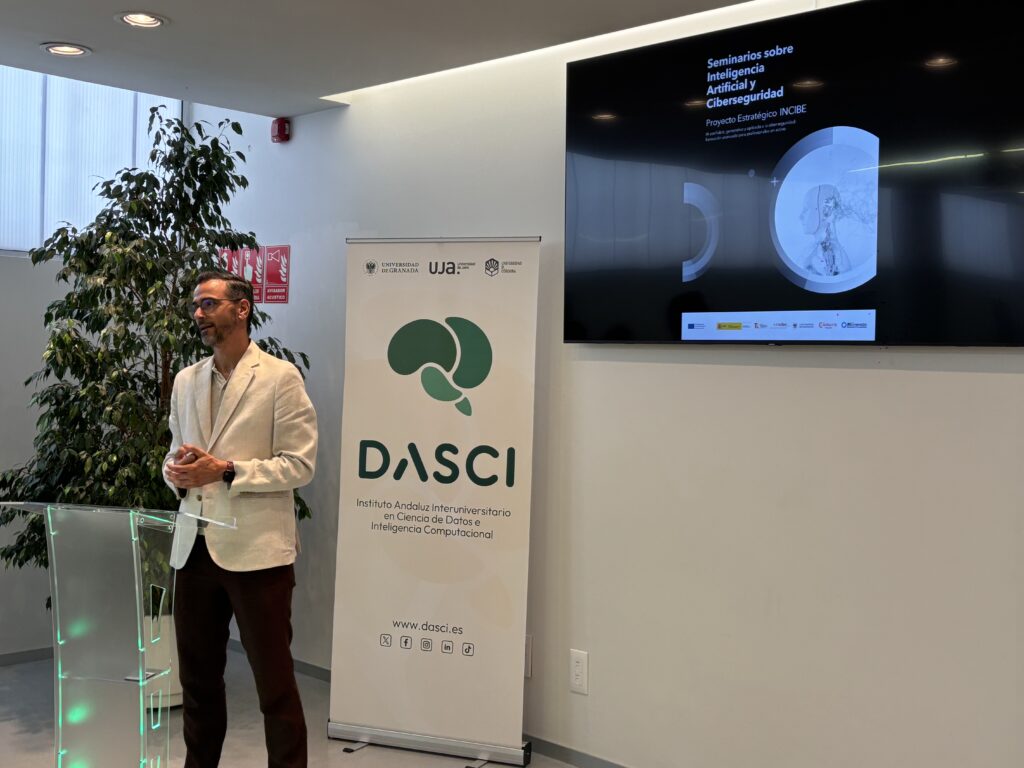
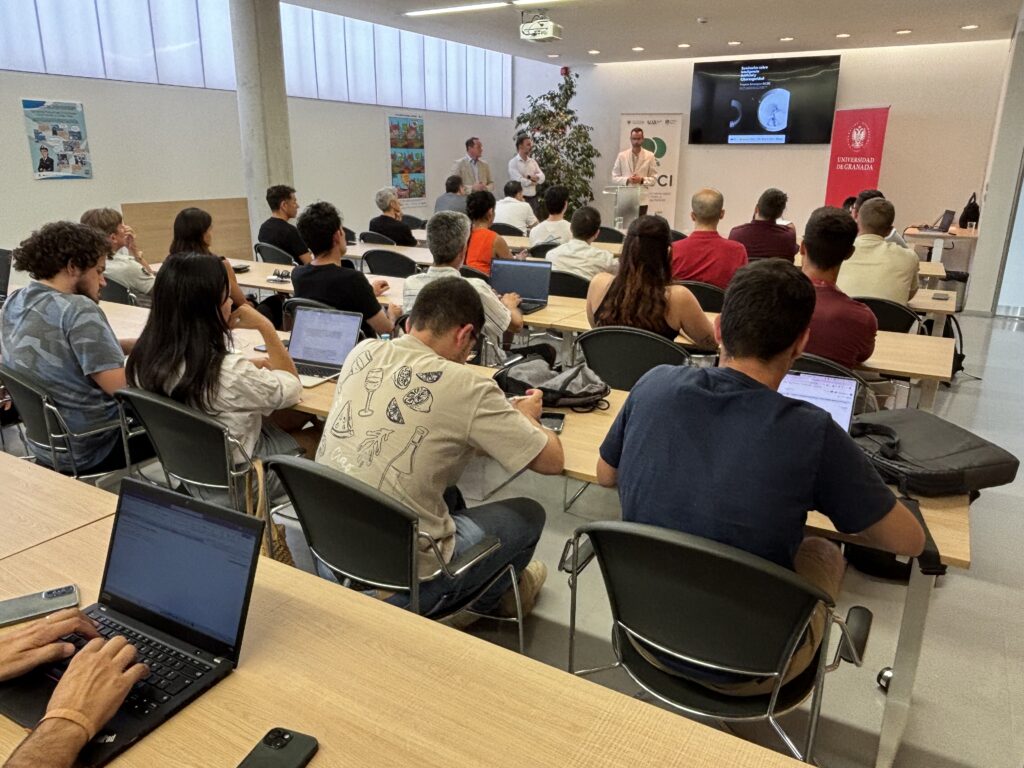
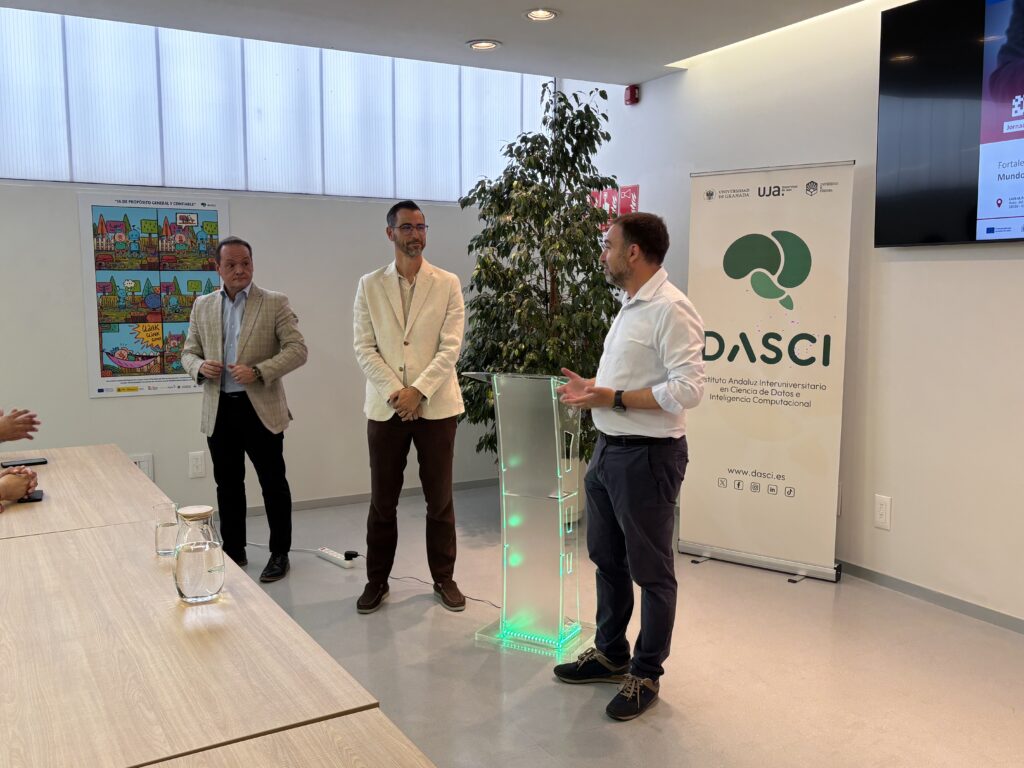
The programme is structured into four independent but complementary modules, each with a specific focus and expert teaching staff in the subject area and interdisciplinary, as there are expert speakers in AI, cybersecurity, legal issues and data privacy. It consists of 51 hours of training spread over 17 thematic sessions.
- Reliable AI: Responsibility and Governance (July) Addresses ethical principles, explainability (XAI), regulation, and governance of AI, with a focus on transparency and bias mitigation.
- Generative AI: Safe Use (September-October) Explores the potential of generative models, their customisation and the security challenges associated with LLMs (Large Language Models).
- Privacy and Data Security and AI (October) Focuses on personal data protection, regulatory compliance, federated learning and data quality in AI environments.
- AI Applied to Cybersecurity (November) Offers a practical overview of how AI enhances threat detection, incident response, and secure software development.
Each seminar combines theory and practice, with laboratories and real-life cases, and is aimed at professionals in the technology and business sectors who wish to update their skills in an increasingly complex digital environment.
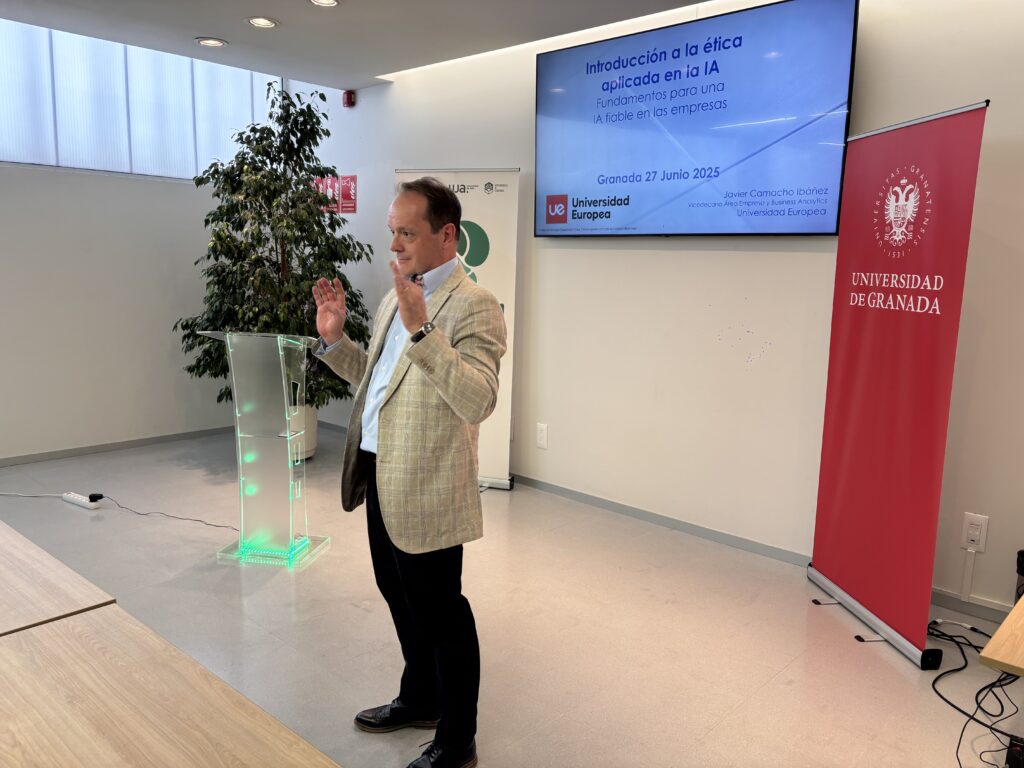
To mark the launch of the programme, a conference entitled ‘Introduction to Applied Ethics in AI: Foundations for Trustworthy AI in Business’ will be held. This session will be led by Javier Camacho Ibáñez, Vice Dean of Business, university professor and researcher in Business Ethics, Ethics in Artificial Intelligence and Corporate Governance. He is a telecommunications engineer and holds a PhD in Economics and Business. He has over 27 years of experience in business management in various sectors and countries. He combines technological and management skills, customer focus and excellent negotiation and problem-solving skills. His current research interest is the application of ethics solutions in artificial intelligence from different perspectives: applications/use cases, definition of the objective-purpose, person-machine decision-making, modelling ethics in algorithms, and the general and social impact of artificial intelligence.

INCIBE’s specific mission is to boost cybersecurity capabilities in society and the economy in general through a programme that seeks to promote and generate knowledge and transfer it to the productive sector, particularly by establishing synergies between the social and economic spheres of cybersecurity. To achieve this goal, a grant programme for excellence in advanced cybersecurity research teams was launched in 2018. In 2022, specifically on 5 December, to continue this strategy, a public invitation was published for collaboration in the promotion of Strategic Cybersecurity Projects in Spain.
These initiatives are part of the Global Security Innovation Programme, included in the Recovery, Transformation and Resilience Plan (PRTR) through Component 15. Investment 7 Cybersecurity: Strengthening the capabilities of citizens, SMEs and professionals and promoting the sector.
Strategic projects are a way of providing concrete solutions to some of the greatest scientific and technological challenges facing our society and economy. They are designed to promote the application of research and innovation results, combining new forms of governance and collaboration, as well as involving citizens and the productive and social fabric.
About DaSCI-UGR
The Andalusian Interuniversity Institute for Data Science and Computational Intelligence, known as the DaSCI Institute, is a collaborative entity between the universities of Granada, Jaén, and Córdoba. It is dedicated to advanced research and training in the field of Artificial Intelligence, with a particular focus on Data Science and Computational Intelligence. The institute brings together a distinguished group of researchers working on joint projects, promoting the development and application of innovative technologies in various sectors. With the aim of becoming a leader in its field, DaSCI promotes the transfer of scientific knowledge to the socio-economic environment, thus contributing to technological progress and the digitalisation of industry. https://dasci.es/es/
About INCIBE
The National Cybersecurity Institute is an entity under the Ministry for Digital Transformation and Public Administration through the Secretary of State for Telecommunications and Digital Infrastructure, established as a benchmark entity for the development of cybersecurity and digital trust among citizens and businesses. It is also a driver of social transformation and an opportunity for innovation, promoting R&D&I and talent.
Resources and links:
- Seminar dossier
Contact
- Francisco Herrera –herrera@decsai.ugr.es
- Alberto Fernández – alberto@decsai.ugr.es